
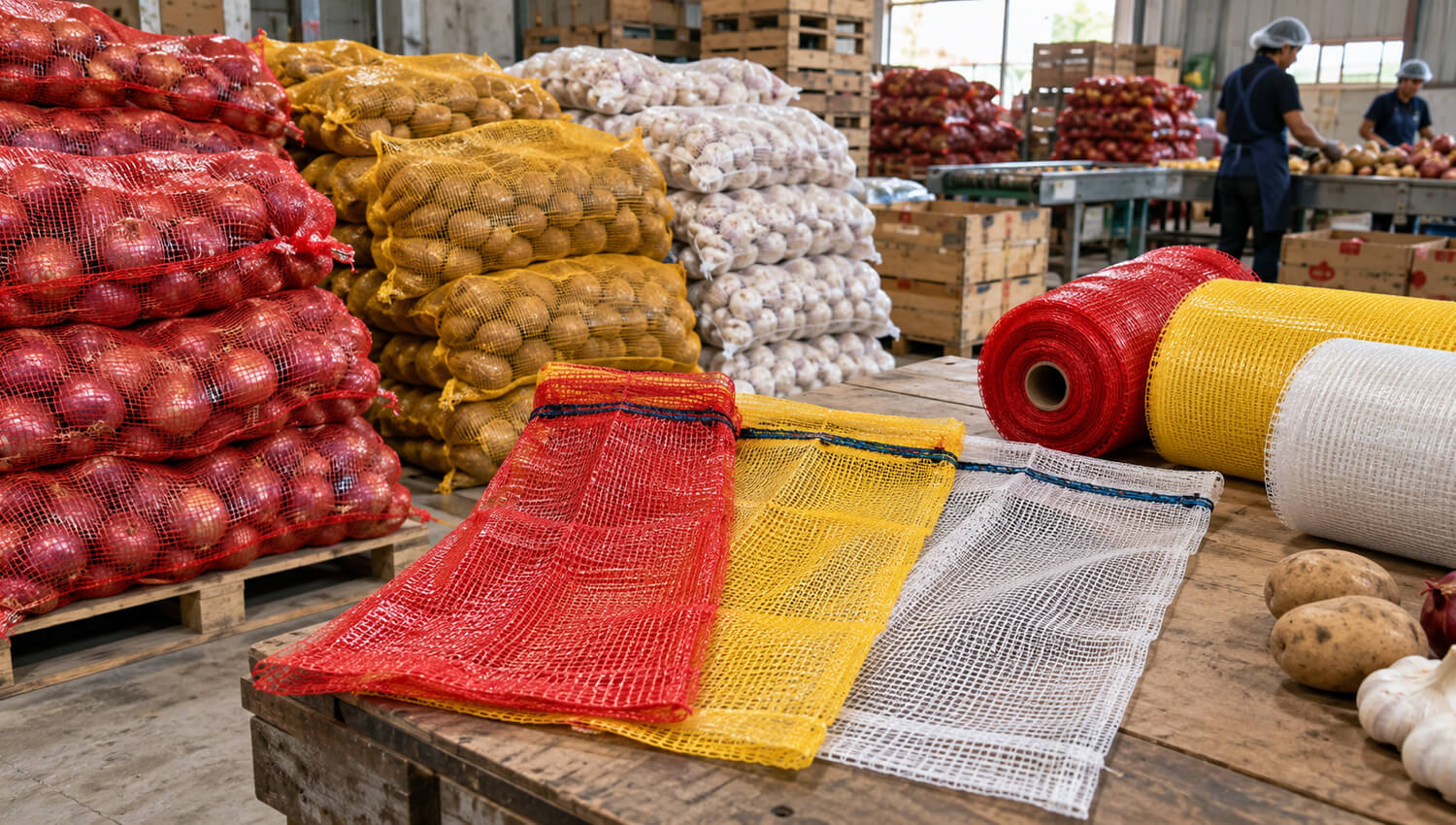
HDPE mesh bags are made from high-density polyethylene, while PP mesh bags use polypropylene. HDPE often offers greater flexibility and good low-temperature toughness. PP is generally stiffer and provides higher heat resistance. Both materials can produce strong, breathable packaging for agricultural products. The right choice depends on the bag’s construction, mesh opening, load capacity, handling conditions, and total packaging cost.
For agricultural exporters and packaging distributors, this isn’t just a question of plastic type. Your packaging must protect products while meeting weight, price, and delivery requirements.
A torn bag can cause produce loss. Poor ventilation can increase moisture problems. Inconsistent bag dimensions can also slow down automated packing operations.
These issues become more expensive when you’re purchasing thousands of bags for regular shipments.
Many buyers compare HDPE and PP based on material price alone. However, the lowest unit price doesn’t always deliver the lowest overall cost.
You also need to examine:
- Bag strength and resistance to tearing
- Air circulation around packed products
- Flexibility during filling and handling
- Bag weight and material consumption
- Printing and customization options
- Quality consistency across production batches
- Food-contact documentation where required
This guide explains how both materials perform and where each one makes sense. It also covers technical specifications, supplier evaluation, and common purchasing mistakes.
The goal is simple: help you select a mesh bag that performs reliably without paying for features your products don’t need.
HDPE vs PP Mesh Bags: What Is the Difference?
The main differences between HDPE and PP mesh bags involve flexibility, stiffness, heat resistance, and processing behavior. However, the properties of a finished bag depend on more than the base polymer.
A well-designed HDPE mesh bag can outperform a poorly constructed PP bag. The reverse is equally true.
For this reason, professional buyers should compare finished products under the same testing conditions.
HDPE vs PP Mesh Bags: Detailed Comparison Table
| Feature | HDPE Mesh Bags | PP Mesh Bags |
|---|---|---|
| Full material name | High-Density Polyethylene | Polypropylene |
| Resin identification | PE, code 2 for HDPE | PP, code 5 |
| Typical polymer density | About 0.94–0.97 g/cm³ | About 0.90–0.91 g/cm³ |
| Material character | Generally tougher and more flexible | Generally stiffer |
| Melting temperature | Commonly around 125–135°C | Commonly around 160–170°C |
| Low-temperature performance | Often better impact toughness | Can become brittle at low temperatures |
| Heat resistance | Lower | Higher |
| Moisture resistance | Excellent | Excellent |
| Chemical resistance | Good against many common substances | Good against many common substances |
| UV resistance | Requires suitable stabilization outdoors | Requires suitable stabilization outdoors |
| Ventilation | Determined by mesh structure | Determined by mesh structure |
| Load capacity | Depends on tape, knit, seams, and design | Depends on tape, weave, seams, and design |
| Printing | Possible with suitable treatment or label construction | Possible with suitable treatment or label construction |
| Recycling | Recyclable where suitable collection exists | Recyclable where suitable collection exists |
| Common applications | Produce packaging, flexible mesh sacks | Woven produce sacks, agricultural and industrial packaging |
Values describe typical polymer characteristics, not guaranteed finished-bag specifications. Actual results depend on the resin grade, additives, orientation, and manufacturing process.
Seven Important Differences
Flexibility: HDPE often offers a more flexible feel, while PP commonly produces a firmer structure.
Temperature: PP generally handles higher temperatures, while HDPE often performs better in cold conditions.
Strength: Finished-bag construction matters more than material names alone.
Ventilation: Both materials allow effective airflow when manufactured with suitable mesh openings.
Cost: Resin price, bag weight, production method, and order volume determine final pricing.
Application: HDPE may suit flexible handling requirements; PP can be useful for structured woven packaging.
Recycling: Both require appropriate collection and processing. Neither automatically guarantees sustainability.
Which Material Should You Choose?
For bags packed with onions, potatoes, citrus, or similar produce, start with the product’s weight and handling conditions.
If flexibility and cold-weather toughness matter, HDPE deserves consideration.
If you need a firm woven structure or higher heat resistance, PP may be suitable.
However, choosing a material should never replace actual bag testing.
A useful purchasing approach is to request both material options with matching bag dimensions and rated loads. Then compare filling performance, drop resistance, seam strength, and price.
This gives you a realistic picture of what each product can deliver.
What Are HDPE Mesh Bags?
HDPE stands for High-Density Polyethylene. It is a thermoplastic made from ethylene-based polymer chains.
Manufacturers use HDPE in many products, including bottles, containers, pipes, films, tapes, and mesh packaging.
For mesh bag production, the material is processed into suitable strands or tapes. These are then formed into an open structure that allows air to pass through.
Depending on the production equipment, HDPE mesh bags may use knitted, woven, or other mesh constructions.
Main Characteristics of HDPE Packaging
HDPE offers an attractive balance of toughness, moisture resistance, and processability.
The material does not absorb much moisture. This makes it useful for packaging agricultural products that may encounter damp environments.
Its flexibility can also help during filling, loading, and unloading.
For example, produce bags often experience repeated bending and squeezing. Packaging that tolerates these movements may be easier to handle.
However, flexibility alone doesn’t guarantee excellent tear resistance. Strand quality, mesh pattern, and reinforcement all matter.
Common HDPE Mesh Bag Applications
HDPE mesh packaging can be used for:
- Onion and garlic packaging
- Potato packaging
- Citrus and other suitable fresh produce
- Agricultural product distribution
- Certain industrial products
- Other products requiring breathable containment
The correct mesh opening is important.
A bag intended for large onions might not work for small garlic bulbs. Openings that are too large may allow smaller products to escape.
Likewise, a very tight mesh may reduce airflow.
Advantages for B2B Buyers
One advantage of HDPE is its potential for flexible bag designs.
This can benefit packing stations where workers need to open, fill, and close bags quickly.
HDPE also has useful low-temperature toughness compared with many standard PP grades.
That property can matter for products moving through cold storage or winter transport.
Still, the finished bag should be tested at the expected temperature. Thin strands, production settings, and recycled material content may affect performance.
For a purchasing manager, the key is to ask for a material specification rather than accepting the label “HDPE” as proof of performance.
A capable manufacturer should identify the material grade and explain the intended bag construction.
What Are PP Mesh Bags?
PP stands for Polypropylene, another widely used thermoplastic polymer.
It appears in woven sacks, packaging tapes, containers, fibers, and many industrial components.
PP is generally lighter by volume than HDPE because its density is lower.
However, this does not automatically mean that a finished PP mesh bag weighs less. Tape thickness, mesh density, and overall construction determine the actual bag weight.
How PP Mesh Bags Are Manufactured
Many PP mesh bags begin with extruded plastic tapes or strands.
The tapes may be stretched to improve mechanical properties before being woven or knitted into the desired structure.
This stretching process is important.
It aligns polymer molecules along the tape direction. The result can be improved tensile performance in that direction.
However, highly oriented tapes may behave differently when cut, punctured, or loaded across their width.
That’s why tensile strength alone cannot describe the full performance of a finished bag.
The bag must also resist tearing around openings, seams, and closures.
Benefits of PP Mesh Bags
PP offers several useful characteristics for commercial packaging.
It has good moisture resistance and can be processed into strong, lightweight tapes.
Its higher melting temperature also provides an advantage in certain heat-exposure conditions.
For agricultural packaging, PP woven mesh structures can offer a relatively firm and stable shape.
This may help when bags need to be stacked, handled, or transported in large quantities.
PP can also support various customization methods, including colored tapes and attached printed labels.
Limitations to Consider
Standard PP materials can become more brittle at low temperatures than HDPE.
This doesn’t mean every PP bag will fail in cold storage. Impact-modified grades, tape design, and manufacturing methods can change performance.
Outdoor exposure is another consideration.
Unstabilized PP can degrade under prolonged ultraviolet radiation. UV stabilizers may help, but buyers should request evidence for any claimed outdoor service life.
You should also check the bag’s closure method.
A strong woven body will provide little benefit if the bottom seam opens during loading.
For repeat wholesale orders, consistent production quality is just as important as the polymer itself.
Strength, Flexibility, and Load Performance
A mesh bag must survive more than one lifting test.
During commercial use, it may pass through filling equipment, conveyor belts, forklifts, delivery trucks, and warehouse handling.
Each stage places different stress on the packaging.
For that reason, a bag rated for a certain weight isn’t automatically suitable for every product of that weight.
Tensile Strength vs. Finished-Bag Strength
Tensile strength measures how a material resists being pulled apart.
However, a mesh bag contains many strands, joints, and openings.
The material’s tensile strength is only one part of the picture.
Consider two bags designed for 20 kg of onions.
One might use thicker strands and larger openings. The other may have thinner strands and a tighter mesh.
Their weight capacities could be similar, but their flexibility, ventilation, and resistance to local damage may differ.
Production consistency also matters. Uneven tape thickness creates weak points, even when the average material quality appears acceptable.
Important Performance Tests
For B2B purchasing, consider the following checks:
| Test | What It Evaluates | Why It Matters |
|---|---|---|
| Tensile test | Strength of individual tapes or strands | Material consistency |
| Finished-bag lift test | Behavior under a specified load | Safe manual handling |
| Drop test | Response to impact | Transport damage prevention |
| Seam strength test | Resistance of stitched or sealed edges | Closure reliability |
| Dimensional inspection | Width, length, and variation | Filling line compatibility |
| Low-temperature test | Behavior in cold conditions | Cold-chain suitability |
| UV aging test | Strength retention after light exposure | Outdoor storage suitability |
For thin plastic tape or film specimens, ASTM D882 provides a recognized tensile testing method. It does not directly establish the load capacity of a complete mesh bag.
How to Determine Load Capacity
A supplier should distinguish between a recommended working load and an actual breaking load.
These are not the same.
A 25 kg produce bag should be tested with its intended contents or a representative test load. The test should include practical handling conditions.
Buyers should also evaluate whether the weight is distributed evenly.
Round vegetables, sharp-edged products, and irregular industrial items place different stress on mesh openings.
For repeat orders, request consistent test conditions and acceptance criteria.
Manufacturer’s purchasing insight: Compare sample bags after filling, closing, lifting, and dropping them under the same conditions. This is more useful than comparing unsupported strength claims.
Ventilation and Agricultural Packaging
Ventilation is one of the main reasons agricultural businesses use mesh bags.
Fresh produce continues to respire after harvest. Some products also release heat and moisture during storage.
A breathable bag allows air to move around the contents.
This can help reduce trapped moisture when combined with suitable storage conditions and airflow.
However, neither HDPE nor PP is automatically more breathable.
Ventilation depends mainly on the mesh design.
How Mesh Opening Affects Airflow
A wide mesh may allow more open space around the product.
However, larger openings may provide less containment for small produce.
A tighter mesh can offer better coverage but may restrict airflow.
The goal is to balance ventilation with product protection.
For example, large onions may work with a relatively open mesh. Smaller garlic bulbs may require smaller openings.
The bag’s size and filling density also matter.
An overfilled bag can deform. It may also limit airflow within tightly packed produce.
Packaging Recommendations by Product
| Agricultural Product | Main Packaging Concern | Suggested Evaluation |
|---|---|---|
| Onions | Air movement and tear resistance | Open mesh with proven load strength |
| Potatoes | Weight and rough handling | Strong construction and reinforced closures |
| Garlic | Small product size | Mesh openings that prevent product loss |
| Oranges | Surface protection and ventilation | Smooth strands and suitable opening size |
| Cabbage | Irregular shape and bulk | Flexible dimensions and load testing |
| Firewood | Abrasion and sharp edges | Strong strands and puncture-resistant construction |
Does Mesh Material Affect Produce Freshness?
It can influence package handling and physical performance. However, material identity alone doesn’t determine shelf life.
Produce freshness depends on several conditions:
- Harvest quality
- Product temperature
- Relative humidity
- Storage duration
- Ventilation rate
- Packaging density
- Handling damage
For example, onions generally need suitable ventilation and dry storage conditions.
A breathable bag can support the storage system, but it cannot correct poor temperature or humidity management.
The same principle applies to potatoes. Packaging must fit the crop’s specific storage requirements.
Buyer takeaway: Select the mesh structure for the produce first. Then choose the polymer and construction that deliver the required strength, flexibility, and cost.
Cost and Total Packaging Value
When purchasing mesh bags in bulk, price differences matter.
However, comparing two quotations based only on unit price can lead to the wrong decision.
An inexpensive bag that breaks during loading may create more expense than it saves.
For distributors, inconsistent packaging quality can also damage customer relationships.
What Determines Mesh Bag Prices?
Several factors influence manufacturing cost.
Raw material price
HDPE and PP resin prices change with supply, demand, grade, and local market conditions.
Neither material is guaranteed to be cheaper in every market.
Bag weight
Heavier bags generally consume more raw material.
However, reducing bag weight too aggressively may weaken the finished product.
Manufacturing process
Extrusion, orientation, knitting or weaving, cutting, and finishing influence production efficiency.
Customization
Special colors, printed labels, reinforced closures, and nonstandard dimensions can affect setup costs.
Order quantity
Larger orders may allow more efficient production and material purchasing. Actual savings depend on the factory’s equipment and scheduling.
Calculate Total Packaging Cost
A simple cost model helps buyers evaluate real value.
Total Packaging Cost = Purchase Cost + Logistics Cost + Damage Losses
Illustrative comparison for 100,000 bags
Hypothetical figures for purchasing analysis; not actual market quotations.
| Metric | Bag A | Bag B |
| Unit price | $0.080 | $0.090 |
| Purchase cost | $8,000 | $9,000 |
| Assumed damage losses | $1,500 | $300 |
| Comparable logistics cost | $500 | $500 |
| Total cost | $10,000 | $9,800 |
Illustrative total packaging cost
Total estimated cost for 100,000 bags
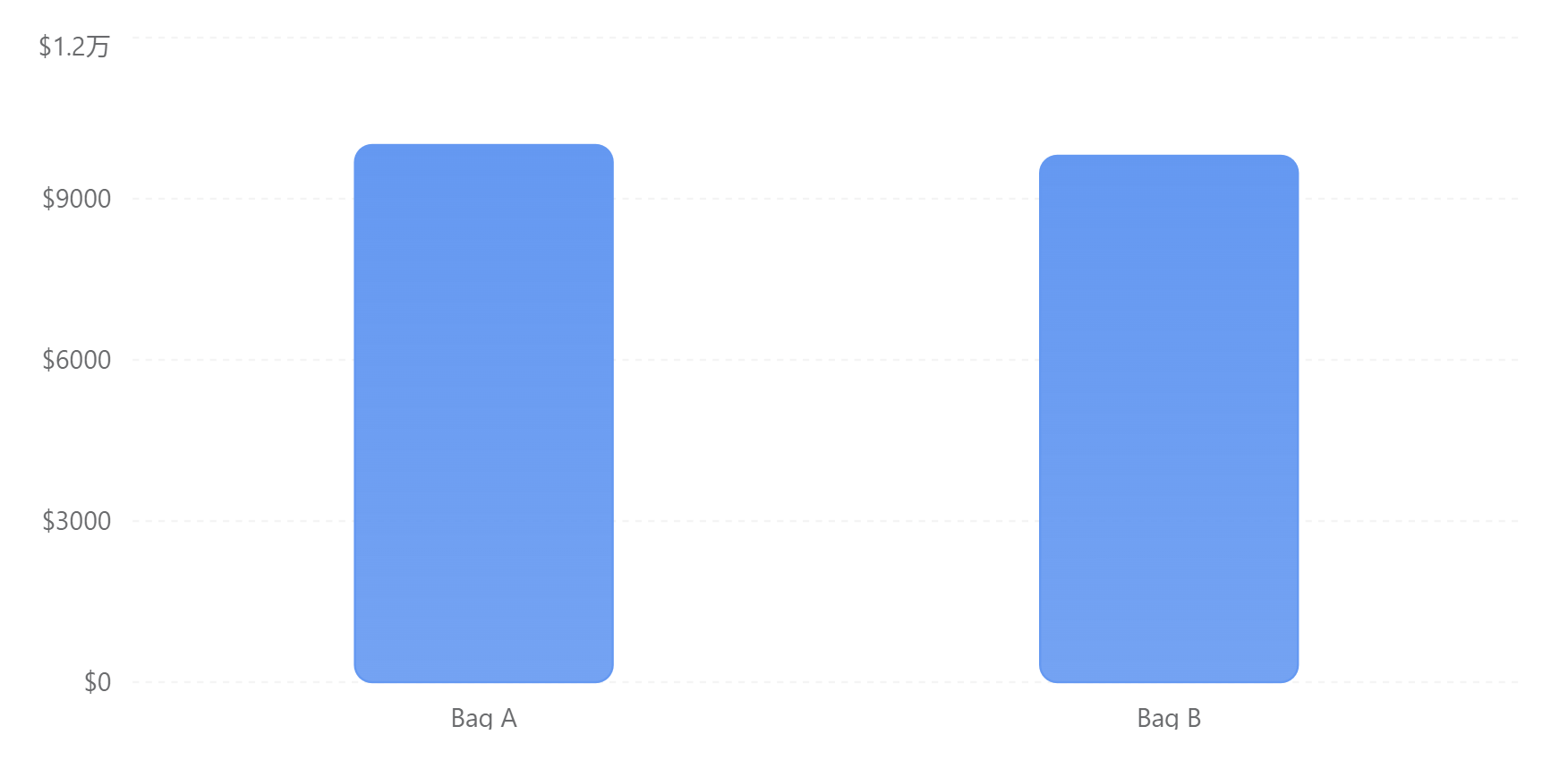
In this example, Bag B has a higher purchase price but a lower total cost.
The actual result depends on verified damage rates and freight costs.
How Buyers Can Reduce Costs
Start by confirming the minimum strength your application requires.
Avoid paying for unnecessary material thickness or excessive reinforcement.
Next, standardize dimensions when possible. This may reduce tooling adjustments, material waste, and inventory complexity.
Finally, compare supplier quotations using the same specifications.
Two quotes are not truly comparable when their bag weights, mesh patterns, or closure designs differ.
Applications for Agricultural and Industrial Buyers
HDPE and PP mesh bags serve overlapping markets.
Both are used where products need airflow, visibility, and practical handling.
The difference lies in how each bag is designed for its final application.
For B2B buyers, the purchasing decision should begin with the product being packed.
Fresh Produce Packaging
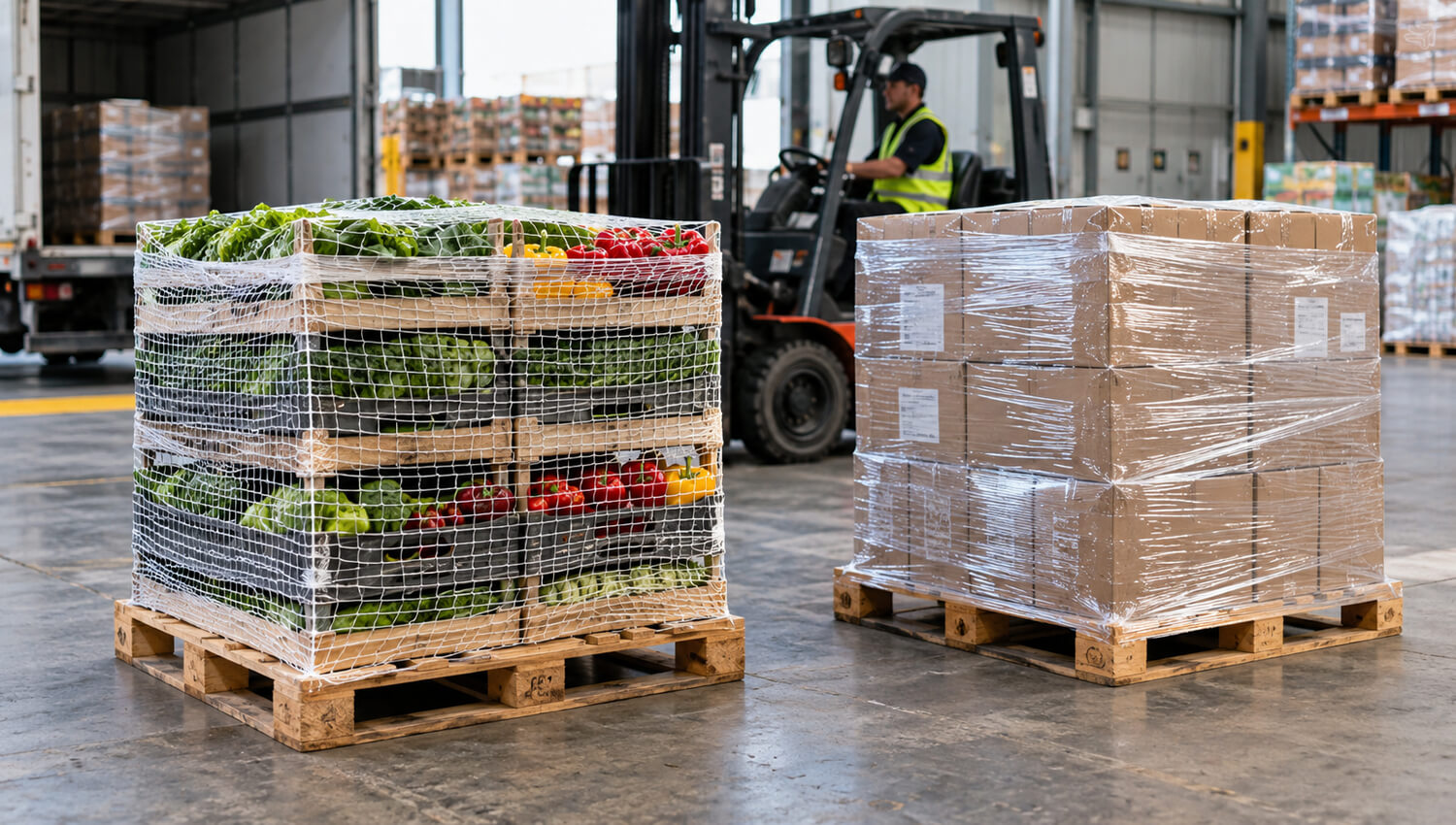
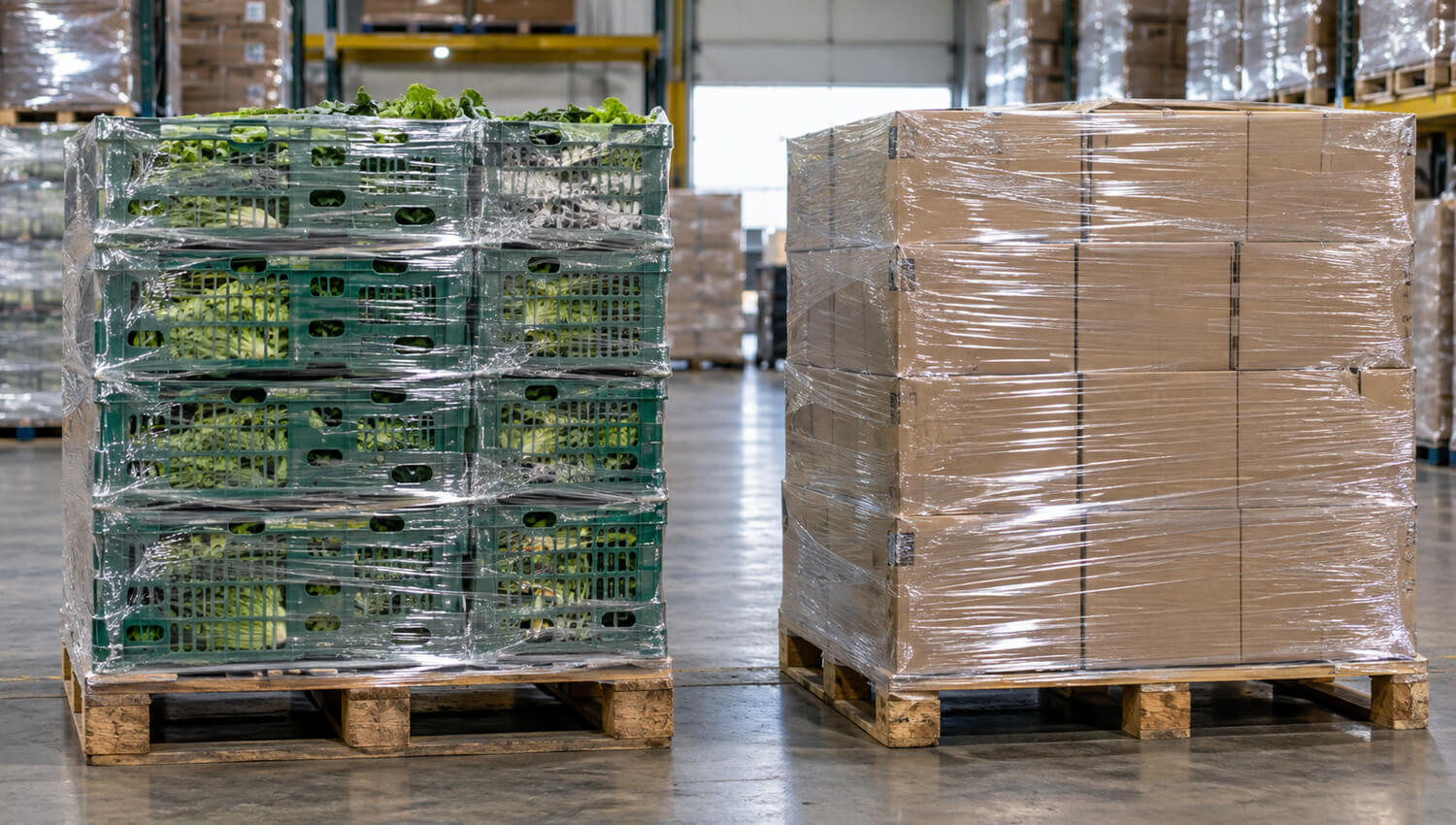
Agricultural exporters commonly need bags for onions, potatoes, garlic, citrus, and other suitable crops.
These products require different combinations of strength and ventilation.
A potato bag may face heavier loading and more friction during handling.
A garlic bag needs openings small enough to retain individual bulbs.
For onions, ventilation and efficient filling may be especially important.
Both HDPE and PP can work, provided the mesh structure suits the crop.
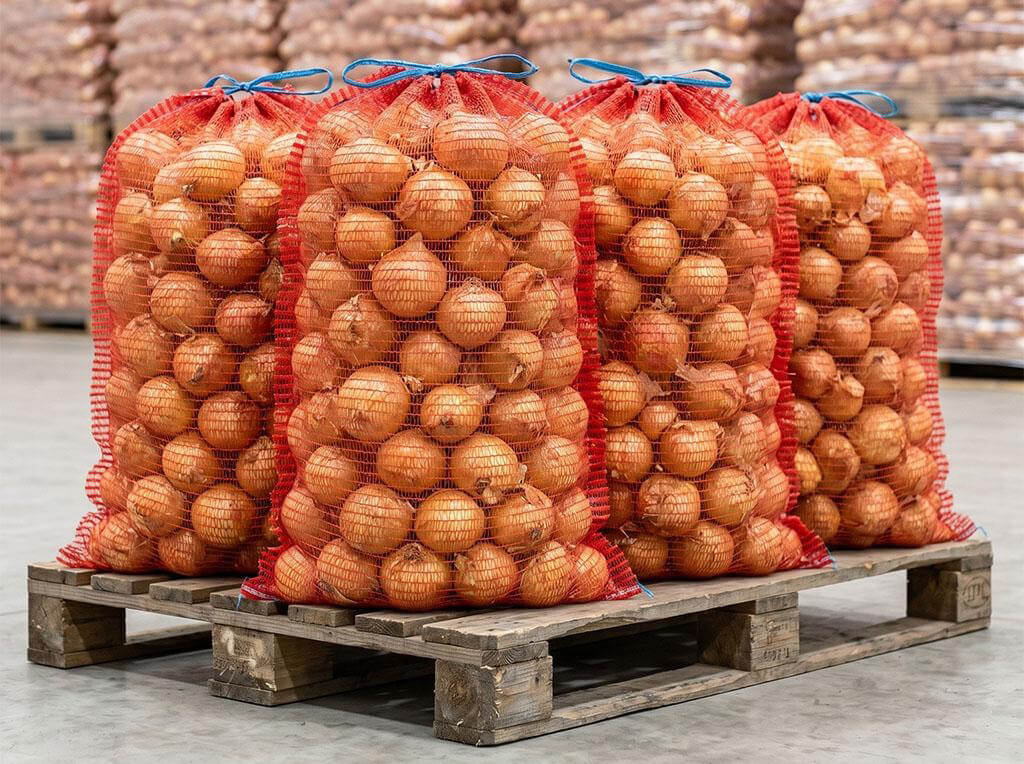
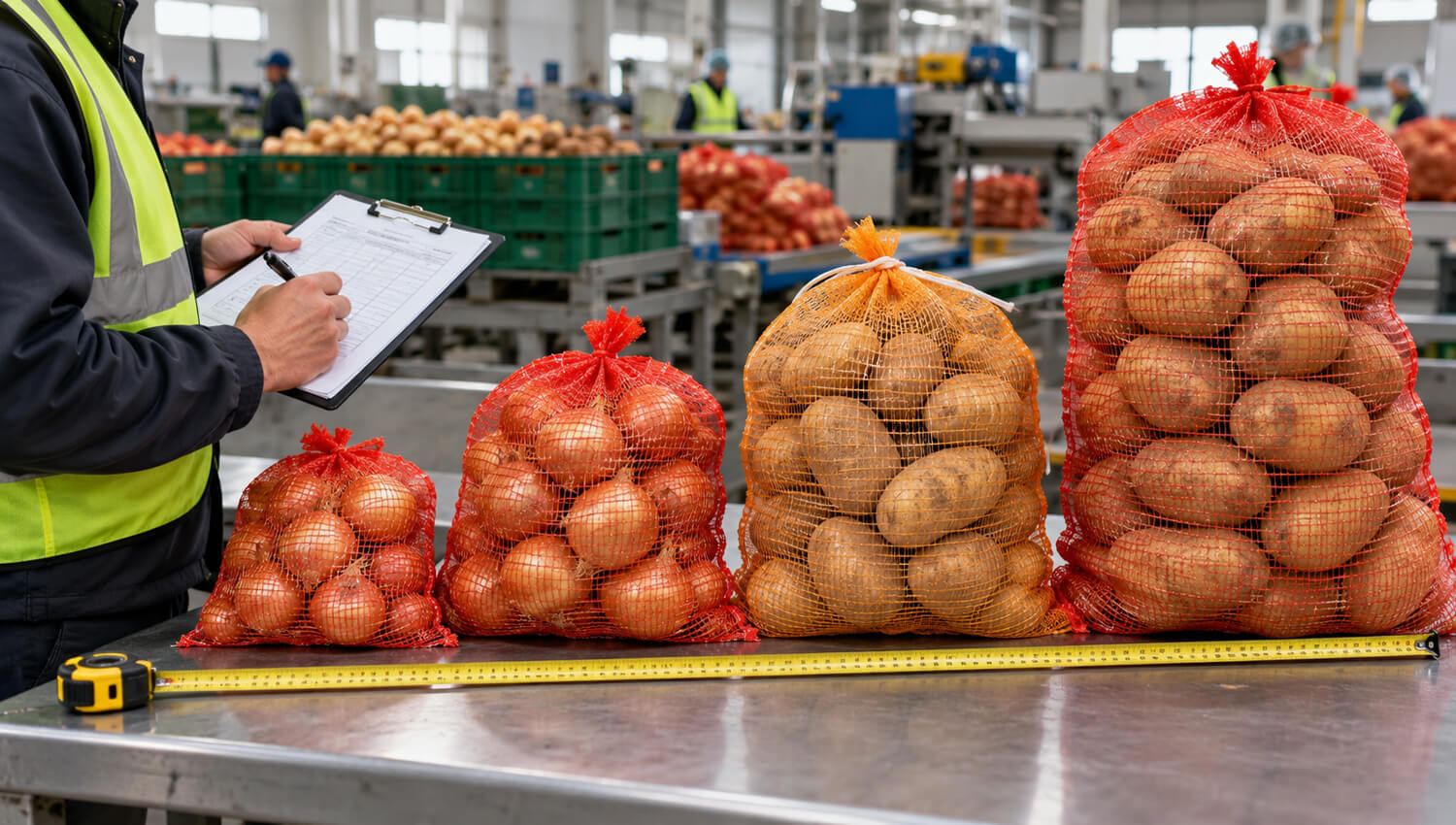
Onion mesh bags for wholesale distribution
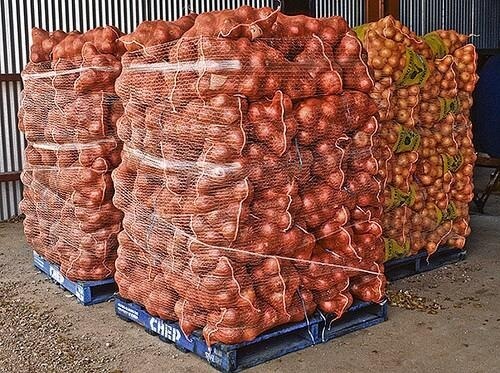
Potato sacks prepared for transport
Wholesale and Retail Produce Bags
Retail packaging often places more emphasis on presentation.
Color, product visibility, and label placement influence shelf appearance.
For example, red or orange mesh can create a familiar produce-packaging look.
However, color should support product identification, not hide quality problems.
Retail buyers may also need consistent bag dimensions for weighing and shelf display.
Small bags require particular attention to closure quality and product retention.
Industrial Packaging
Mesh bags may also be used for firewood, certain hardware, and other suitable dry products.
These applications can create different mechanical demands.
Firewood, for example, may have rough edges. The bag must tolerate abrasion and localized pressure.
Industrial products may require stronger seams or reinforcement.
In these cases, don’t assume a produce bag will perform well simply because its rated weight is sufficient.
Test the packaging with the intended product.
Choosing by Distribution Channel
The same product may need different packaging for different channels.
A local wholesale shipment might involve limited handling.
An international export order can involve longer transport, pallet movement, and several loading stages.
Retail packaging may prioritize appearance, while bulk agricultural packaging focuses more on handling efficiency.
Your supplier should understand these differences before recommending a bag design.
Customization and OEM Manufacturing Options
For importers and packaging distributors, customization plays an important role in product positioning.
A standard mesh bag may satisfy basic packaging requirements.
However, customized specifications can improve packing efficiency, brand presentation, and customer satisfaction.
Both HDPE and PP mesh bags can support a range of OEM options.
The exact possibilities depend on the manufacturing process.
Bag Dimensions and Load Ratings
Common purchasing requirements include bag width, length, expected filling weight, and closure type.
However, there is no single universal bag dimension for every weight category.
A 10 kg onion bag may require different dimensions from a 10 kg potato bag.
Bulk density, product shape, and filling method affect the result.
Rather than relying on a generic size chart, request samples matched to the intended contents.
Colors, Printing, and Branding
Buyers may request:
- Custom mesh colors
- Branded labels or sleeves
- Product identification tags
- Printed packing information
- Barcode labels
- Private-label packaging
- Specific closure colors or materials
Direct printing is not suitable for every open-mesh design.
Some products use printed bands, attached labels, or other branding methods instead.
The printing method should be confirmed during sampling.
Closures and Reinforcement
The bag opening can have a major effect on filling speed.
Possible constructions include drawstring openings, stitched closures, and heat-sealed or otherwise secured ends.
Closure options depend on the polymer and bag design.
A suitable opening should support the intended filling method without creating unnecessary handling steps.
For high-volume packing operations, even small improvements in filling speed can matter.
What to Include in an OEM Inquiry
| Specification | Information to Provide |
|---|---|
| Material | HDPE, PP, or request both |
| Application | Onions, potatoes, garlic, firewood, etc. |
| Capacity | Net product weight per bag |
| Dimensions | Width and length |
| Mesh design | Opening size or reference sample |
| Color | Standard or custom |
| Closure | Drawstring, stitching, or other |
| Branding | Label, band, or printing details |
| Order quantity | Trial and estimated annual volume |
| Destination | Country and delivery terms |
A complete specification helps manufacturers produce accurate quotations.
It also reduces the risk of receiving samples that cannot be compared fairly.
OEM sourcing tip: If you already use a suitable mesh bag, provide a physical sample and its current performance requirements. This can speed up specification matching.
Quality Control and International Compliance
Quality consistency is essential when importing mesh bags in large quantities.
One shipment may contain tens of thousands of bags. Even a small percentage of defective products can create considerable problems.
For agricultural distributors, these issues may appear during peak packing seasons. At that point, replacement packaging can be difficult to obtain quickly.
A reliable quality control process should begin before mass production.
Raw Material Inspection
The manufacturer should verify that the resin and additives match the agreed specifications.
Important factors include:
- Polymer type and material grade
- Virgin or recycled material content
- Melt flow characteristics
- Color masterbatch consistency
- UV stabilizer requirements
- Batch identification and traceability
Recycled content should be declared when relevant to the order.
It may affect performance, consistency, and eligibility for certain food-contact applications.
In-Process Quality Control
During manufacturing, quality inspections should focus on strand or tape consistency.
Uneven tape thickness can weaken the bag.
Other checks may include mesh opening uniformity, dimensions, bag weight, and seam construction.
For example, a supplier might agree to a nominal bag width of 500 mm with a contractual tolerance of ±10 mm.
This is an illustrative specification, not a universal industry tolerance.
The actual tolerance should be defined according to your filling equipment and product requirements.
Food-Contact Requirements
Food-contact suitability requires more than identifying the resin as HDPE or PP.
In the United States, 21 CFR §177.1520 addresses certain olefin polymers used in food-contact applications.
However, the finished packaging must also satisfy the applicable requirements for additives, intended foods, and conditions of use.
For the European Union, buyers should assess the applicable food-contact framework, including relevant plastics requirements where applicable.
Ask suppliers to provide appropriate declarations and supporting documentation.
Don’t assume a material is compliant merely because it is commonly used in agricultural packaging.
Pre-Shipment Inspection
Before shipping a large order, a practical inspection should verify:
| Inspection Item | Acceptance Requirement |
|---|---|
| Bag material | Matches approved specification |
| Dimensions | Within agreed tolerances |
| Bag weight | Within agreed range |
| Mesh consistency | No unacceptable defects |
| Closure strength | Passes agreed testing |
| Load performance | Meets approved test criteria |
| Color | Matches approved sample |
| Labeling | Correct wording and artwork |
| Packaging quantity | Matches packing list |
| Carton condition | Suitable for export handling |
Request written acceptance criteria before production.
This avoids disputes over subjective terms such as “strong,” “heavy-duty,” or “premium quality.”
How to Choose the Right Mesh Bag Supplier
Choosing a manufacturer involves more than comparing product catalogs.
A supplier should be able to explain how the proposed bag meets your requirements.
This is especially important when changing materials or replacing an existing supplier.
Ask for Technical Specifications
Begin with a written specification covering the bag’s material, dimensions, weight, mesh construction, closure, and intended capacity.
Ask whether the supplier uses virgin resin, recycled resin, or a controlled mixture.
If UV resistance or food-contact suitability matters, include these requirements from the beginning.
A manufacturer should distinguish between verified specifications and optional capabilities.
Request Samples Before Bulk Production
Samples help you assess the bag under realistic conditions.
Use your actual products whenever possible.
A simple evaluation may include:
- Filling the bag to its normal working weight
- Closing it using the intended method
- Lifting it repeatedly
- Checking for strand and seam damage
- Testing compatibility with packing machinery
- Evaluating appearance after handling
For bags used outdoors, additional aging tests may be necessary.
Check Manufacturing and Export Capabilities
Ask how the factory controls batch consistency and handles nonconforming products.
For repeat orders, confirm whether the same bag construction can be reproduced.
You should also discuss export packing, labeling, lead time, shipping terms, and documentation.
ISO certification may provide useful information about a supplier’s quality management system. However, a certificate alone does not prove that a particular mesh bag has passed performance testing.
Supplier Evaluation Scorecard
The following weighted scorecard is an example for procurement teams. Adjust the weighting to your products and risks.
Supplier selection priorities
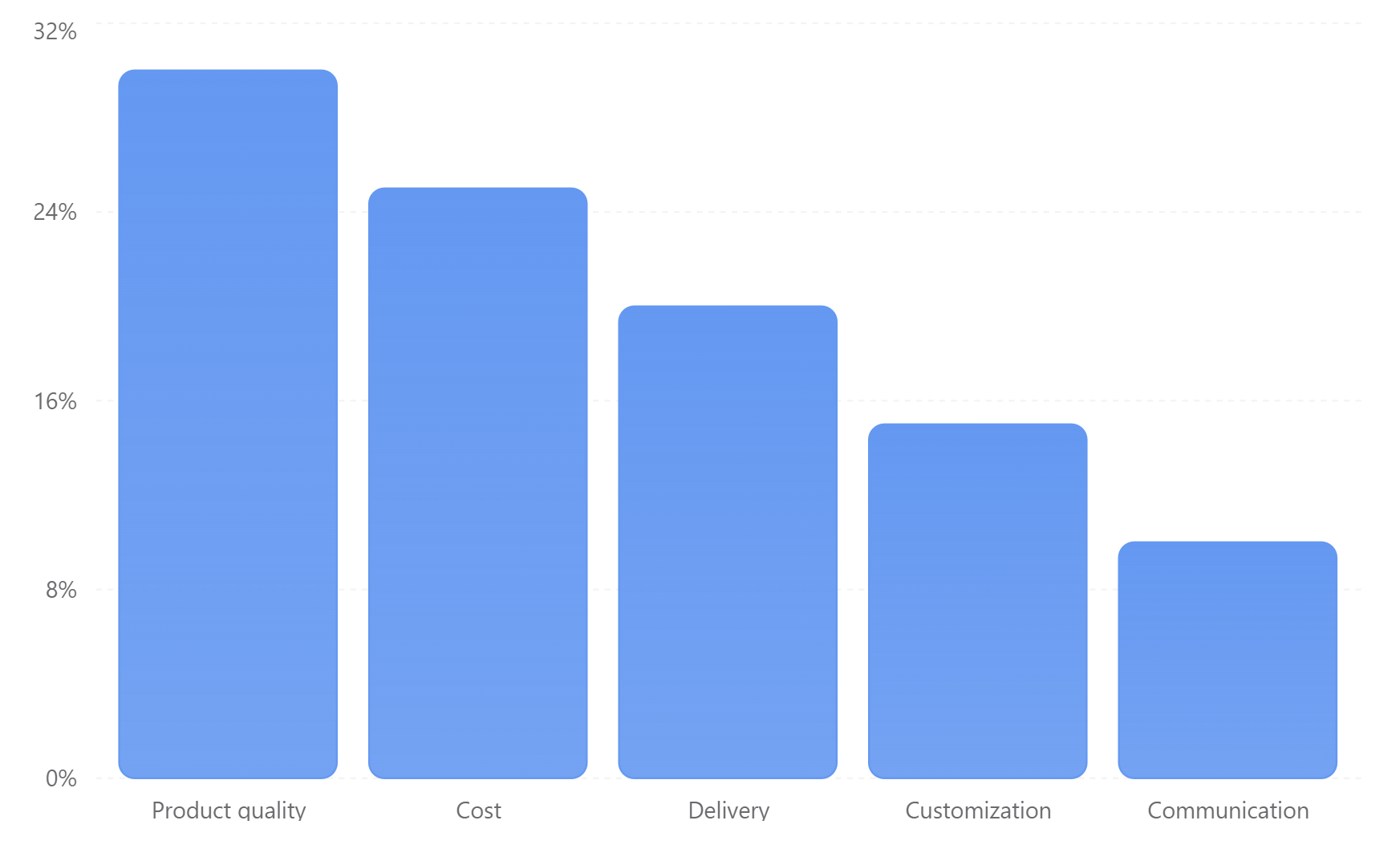
Illustrative weighting for supplier evaluation. Not industry benchmark data.
Final Procurement Recommendation
Before confirming a bulk purchase, obtain an approved sample, written technical specification, and clear inspection agreement.
For major orders, consider a trial shipment.
This allows you to measure actual performance before expanding the purchasing volume.
The aim isn’t to choose HDPE or PP based on assumptions. It’s to identify a consistent, commercially suitable product that meets your operating needs.
FAQs
Are HDPE Mesh Bags Stronger Than PP Mesh Bags?
Not necessarily. HDPE often offers greater flexibility and good toughness, while oriented PP tapes can provide high tensile strength. Actual bag performance depends on strand dimensions, mesh structure, seams, and manufacturing quality. Compare finished bags under equivalent loads.
Which Material Is Better for Onion Packaging?
Both materials can work for onions. Focus on ventilation, bag strength, filling speed, and handling conditions. HDPE may be useful where flexibility is important. PP may suit certain woven constructions. Test the proposed design with your actual onions.
Are PP Mesh Bags Cheaper Than HDPE Mesh Bags?
There is no fixed price advantage. Resin costs change, and finished-bag pricing depends on weight, dimensions, mesh density, production methods, and order quantity. Request comparable quotations with identical performance requirements before deciding which option offers better value.
Can HDPE and PP Mesh Bags Be Recycled?
Both polymers are technically recyclable. However, collection and processing depend on local facilities, contamination, and product construction. Mesh bags can be challenging for some recycling systems. Ask your waste-management provider whether the specific packaging format is accepted.
Which Mesh Bag Is Better for Cold Storage?
HDPE generally has better low-temperature impact toughness than standard PP. However, finished-bag performance varies with material grade, additives, and construction. If your product enters cold storage, request samples tested at the expected temperature and handling conditions.
Can Mesh Bags Be Used for Direct Food Contact?
They may be suitable when the finished packaging complies with applicable food-contact requirements. Material identification alone is insufficient. Buyers should request relevant compliance declarations and supporting test information, taking the destination market and intended food-contact conditions into account.
What Is the Difference Between Raschel Mesh Bags and Woven PP Bags?
Raschel refers to a knitted construction, while woven bags use interlaced strands or tapes. These terms describe manufacturing methods, not necessarily different polymers. Both construction and material influence flexibility, load behavior, appearance, and ventilation.
What Information Is Needed for a Bulk Mesh Bag Quotation?
Provide the intended product, filling weight, bag dimensions, estimated order volume, closure type, color, destination country, and branding requirements. A reference sample is especially helpful. This information allows the manufacturer to recommend a suitable construction and prepare a more accurate quotation.
Can Mesh Bags Be Customized With a Company Logo?
Yes, depending on the bag design and supplier’s production capabilities. Common methods include printed labels, branded bands, and custom-colored mesh. Provide your artwork, required label dimensions, and estimated volume so the manufacturer can confirm available options.
How Can Buyers Reduce Mesh Bag Breakage During Transportation?
Start with suitable load capacity and reliable seams. Avoid overfilling, and use proper pallet handling. Test filled bags under realistic transport conditions. If damage continues, review mesh construction, product abrasion, closures, and stacking practices before simply increasing bag thickness.
Conclusion: Choose the Right Mesh Bag for Your Business
Both HDPE and PP mesh bags provide practical solutions for agricultural and commercial packaging.
HDPE often offers better flexibility and low-temperature toughness. PP generally provides greater stiffness and higher heat resistance.
However, neither polymer is automatically superior for every application.
The most suitable mesh bag depends on the packaged product, weight, dimensions, handling conditions, and required performance.
For professional buyers, the purchasing process should focus on measurable specifications.
Consider these priorities before ordering:
- Select the mesh opening for product size and ventilation.
- Confirm the bag can handle its intended working load.
- Evaluate seam strength and filling compatibility.
- Compare total packaging cost, not only unit price.
- Check compliance documents where needed.
- Approve samples before mass production.
A well-specified mesh bag can help reduce product loss, improve handling efficiency, and support consistent distribution.
Contact us to discuss your OEM mesh bag requirements, compare HDPE and PP options, and request a bulk manufacturing quotation.
 English
  Russian
  Spanish
  Portuguese
  Arabic
  French
  Indonesian